



Turn years of operational data into your next competitive advantage.
Your ERP already knows what customers buy, when they buy it, what they stopped buying, which products move together and how purchasing behaviour changes over time.
Margins builds AI into distribution operations to turn that information into earlier signals, better decisions, smarter field sales and more automated workflows.
From transactions to intelligence. From intelligence to action.
Your ERP tells you what happened. AI can help tell you what is about to happen.
Most established distributors already have years of valuable information — but much of it is used retrospectively. Reports tell management what happened last month.
- Customer orders
- Invoice history
- Product mix
- Purchase frequency
- Pricing
- Margins
- Inventory
- Returns
- Sales activity
- Seasonality
The value isn’t having more data. It’s seeing something in the data early enough to act.
Thousands of transactions contain patterns no salesperson can track manually.
Imagine a salesperson managing 150 accounts and hundreds or thousands of products. They cannot continuously compare:
- 01What every customer normally buys.
- 02How often they normally order.
- 03Which categories are declining.
- 04Which products disappeared from the basket.
- 05Whether purchasing frequency has changed.
- 06Whether order value is slowly falling.
- 07Whether behaviour is unusual for the season.
- 08Whether similar customers buy something this customer doesn’t.
AI can.
AI doesn’t replace the salesperson’s relationship with the customer. It gives them a better reason to call.
Don’t discover a lost customer after the revenue disappears.
In distribution, customer loss isn’t always a cancellation. One category disappears. Order frequency falls. Volumes decline. Purchasing moves elsewhere. AI can continuously analyze purchasing behaviour and surface customers whose patterns indicate potential revenue decline.
Seeing revenue risk before the salesperson does.
A predictive system built around four years of invoice history, using multiple detection methods and seasonal layers to identify abnormal changes in purchasing behaviour and prioritize commercial alerts — operating inside the customer’s ERP environment, without business data leaving the company.
Read the case study →The AI doesn’t just predict churn. It creates time for the commercial team to do something about it.
Know what matters before walking through the customer’s door.
A field salesperson shouldn’t spend the first ten minutes of every visit reconstructing the customer from ERP reports, spreadsheets and memory. Before a visit, AI can bring together:
This isn’t a generic AI assistant. It understands that customer, inside that distributor.
- ⚠Purchasing frequency down 18%
- ↘Beverage category declining
- +3 products commonly purchased by similar customers
- ✓Last visit: 17 days ago
- →Recommended discussion: Category B decline
From fragmented sales information to an AI field-sales cockpit.
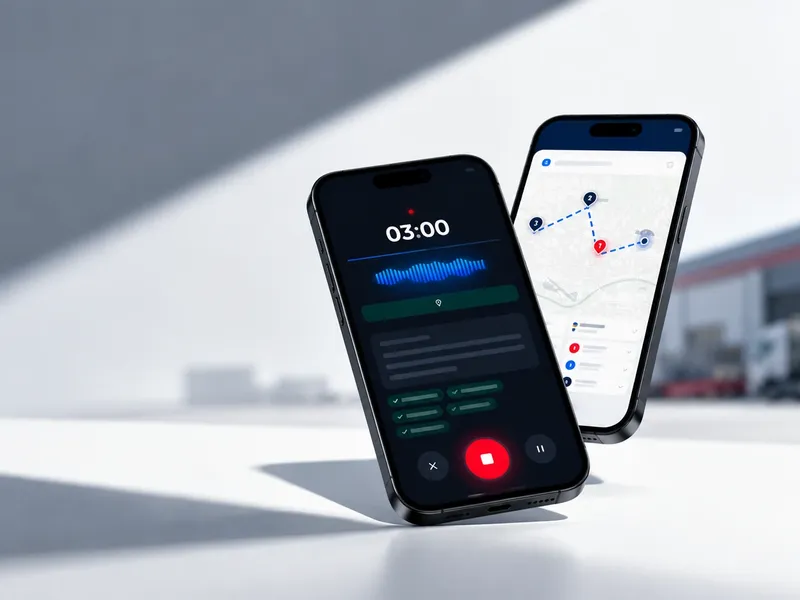
CIAK’s field-sales information was distributed across ERP, BI, Excel and employee knowledge. Margins built an AI mobile cockpit that brings purchasing patterns, machine-learning detection, customer briefings, spoken reporting and an AI assistant into the salesperson’s workflow — inside CIAK’s own cloud.
Read the case studyThe goal isn’t more analytics. It’s a better next action.
Dashboards explain the business. AI can help decide what deserves attention.
- Which customers caused it?
- Which change is unusual?
- What is likely to happen next?
- Which accounts deserve attention first?
- What should the salesperson investigate?
- Which opportunities are being missed?
Data
10 million transactions
Reporting
What happened?
Detection
What’s unusual?
Prediction
What may happen next?
Recommendation
What deserves attention?
Action
What should we do?
AI becomes valuable when insight changes what somebody does next.
The same data that reveals risk can reveal opportunity.
- Customers who may be ready for another product category.
- Products commonly purchased together.
- Customers whose purchasing differs from similar accounts.
- Categories with unusual growth.
- Accounts with increasing demand.
- Products a customer historically bought but stopped purchasing.
What else might this customer need?
Which categories are missing?
When should the next purchase normally happen?
Where should commercial attention go today?
Where is demand emerging?
Instead of asking salespeople to find opportunities across thousands of rows, bring the opportunities to them.
Distribution is full of decisions repeated at scale.
Opportunity areas to investigate across the value chain — not a list of everything already delivered.
- Suppliers
- Purchasing
- Inventory
- Operations
- Sales
- Delivery
- Customer
Purchasing
- Demand signals
- Purchasing recommendations
- Supplier analysis
- Document automation
Inventory
- Demand forecasting
- Stock-risk detection
- Slow-moving inventory
- Anomaly detection
Sales
- Customer-risk detection
- Cross-sell opportunities
- Visit preparation
- Next-best action
Field operations
- Visit prioritization
- Route support
- Voice reporting
- AI assistants
Back office
- Document processing
- Order entry
- Data reconciliation
- Email workflows
Management
- Exception detection
- Forecasting
- Commercial intelligence
- Decision support
Not every repetitive process needs another person.
Much of distribution’s administrative volume involves people moving information between systems. AI and automation can increasingly handle the repetitive part while people deal with exceptions requiring judgment.
- Orders
- Invoices
- Supplier documents
- Customer requests
- Product information
- Emails
- Claims
- Returns
- Price lists
- Reports
- Approvals
- 01Document / email / request
- 02Understand
- 03Extract
- 04Validate
- 05Decide
- 06Update system
- 07Human exception when needed
Automate the predictable. Escalate the exceptional.
Some of your most valuable distribution intelligence isn’t in the ERP.
- 01
An experienced salesperson knows a particular customer behaves differently in summer.
- 02
A purchasing manager knows which supplier delays become problematic.
- 03
An operations manager knows which exception requires immediate escalation.
- 04
A product specialist knows which alternatives work when an item is unavailable.
Your ERP contains the transactions. Your people understand why they matter. AI is far more powerful when it can work with both.
Explore CaptaGive employees answers grounded in your business.
Instead of searching across documents, systems and colleagues, employees interact with AI built around approved organizational information — retrieving from approved enterprise sources rather than relying solely on generic model knowledge.
Generic AI knows the world. Enterprise AI should know your business.
- “What are the conditions for this customer?”
- “Which substitute products could we offer?”
- “What happened with this account last month?”
- “Which customers stopped buying Product X?”
- “What is our procedure for this type of return?”
- “Which customers should I prioritize today?”
The easiest interface in the field may be speaking.
A salesperson leaving a customer visit shouldn’t need to sit in a car typing notes into a CRM. CIAK’s implementation already includes spoken reporting as part of its AI field-sales cockpit.
Turn conversations into structured business data without adding administrative work.
- Visit summaryInterested in new frozen range
- CRM updateConcern: delivery frequency
- Follow-up taskNext Tuesday
- Customer signalPricing requested · 3 products
- Management visibilityOpportunity flagged
Your ERP doesn’t need to disappear.
AI transformation in distribution should not automatically mean replacing the ERP, CRM or operational systems that took years to establish. Margins builds AI around the existing technology environment.
AI transformation shouldn’t require an ERP transformation first.
Explore IntegrationsYears of customer and commercial history shouldn’t have to become somebody else’s asset.
Margins can design AI inside customer-controlled environments, including customer cloud and private / on-premise architectures. Marikomerc’s system operates without business data leaving the company; CIAK’s operates inside CIAK’s own cloud.
Explore Private & On-Premise AI- Customer purchasing history.
- Pricing.
- Margins.
- Product data.
- Commercial agreements.
- Supplier information.
- Sales activity.
- Internal operational knowledge.
Bring AI to your business data. Not your business data to AI.
You don’t need to transform the entire distribution business at once.
Start with one problem where AI can create measurable value. Each implementation creates data, integrations, knowledge and organizational experience that make the next one easier.
- 01Customer retentionDetect revenue decline earlier.
- 02Field salesGive salespeople better customer intelligence.
- 03Cross-sellIdentify commercial opportunities.
- 04AutomationRemove repetitive administrative work.
- 05KnowledgeMake company expertise available across the organization.
- 06OperationsUse AI across more decisions and workflows.
Where AI could change your operation.
Hover or tap any part of the operation to see the AI opportunities worth investigating there.
- Forecasts
- Exceptions
- Decision intelligence
- Demand signals
- Purchasing recommendations
- Supplier analysis
- Connected ERP data
- Shared context
- Quality signals
- Account prioritization
- Cross-sell
- Next-best action
- Supplier analysis
- Document automation
- Demand forecasting
- Stock anomalies
- Transactions
- Order history
- Customer data
- Visit preparation
- Account prioritization
- AI assistant
- Churn detection
- Cross-sell
- Next-best action
- Back-office documents
- Order entry
- Email automation
- Voice reporting
- Knowledge access
- Route intelligence
- Route support
- Exception detection
- Order entry
- Document processing
Start with the process, not the technology.
We work with management and the people who actually run the operation to understand:
- Where revenue is being lost.
- Where people spend repetitive time.
- Where decisions are made without enough information.
- Where important signals are discovered too late.
- Where knowledge depends on particular employees.
- Where systems are disconnected.
- Where better information would change an outcome.
- 01Business problem
- 02Process
- 03Data
- 04AI opportunity
- 05Value × Feasibility
- 06First implementation
The objective isn’t to find somewhere to use AI. It’s to find where AI is worth using.
We’ve already put AI into real distribution operations.
We understand the data
Transactions, customers, products, seasonality and operational systems.
We understand the operation
AI needs to fit salespeople, managers and existing processes — not just produce an accurate model.
We integrate with what you have
ERP, business systems, databases and existing workflows remain part of the architecture.
We build the complete system
AI, software, data, mobile applications, integrations and infrastructure.
We can keep it private
Architectures can operate inside customer-controlled environments where appropriate.
We stay after go-live
Managed AI and Forward Deployed Engineering keep systems close to the operation as reality changes.
Our clients in distribution.

Know which customers are at risk before the revenue disappears.
- 94.7% validated losses detected
- 43-day median warning
- €3.7M annualized exposure identified
Give every field salesperson the intelligence to know what matters next.
- AI field-sales cockpit
- ML purchasing signals
- Voice reporting
- Customer-owned cloud

Put AI into the field-sales operation.
- Outlet-specific intelligence
- Computer vision
- AI assistance
- Management visibility
Related capabilities
AI Strategy & Consulting
Find where AI can create the most value in your distribution business.
Explore AI Strategy →AI Engineering
Build production AI around your data and workflows.
Explore AI Engineering →Integrations
Connect AI to ERP, CRM and operational systems.
Explore Integrations →Private & On-Premise AI
Keep proprietary commercial intelligence under your control.
Explore Private AI →Managed AI
Operate AI after it enters daily business operations.
Explore Managed AI →
Your business has years of data. What could it tell you that you don’t know today?
We’ll work with your leadership and operational teams to identify where AI could materially improve sales, operations or decision-making — and determine which opportunity is worth building first.
Explore AI opportunitiesStart with your business. Find the signal. Build from there.