




Put AI to work in healthcare without compromising trust.
Healthcare runs on information, expertise and trust.
Margins builds AI into healthcare and life-science workflows to help teams handle documentation faster, coordinate scheduling and resources, surface what needs attention and make clinical and operational knowledge easier to reach — designed around patient privacy, regulation and professional oversight.
More time for care. Less administrative friction. Clear human oversight.
Healthcare already runs on expertise. AI changes how much information people can work with.
Around clinical care sits an enormous amount of work involving people:
- Reading
- Documenting
- Coding
- Scheduling
- Checking
- Searching
- Summarizing
- Coordinating
- Reporting
- Following up
AI is most valuable when it gives professionals time back without removing professional accountability.
Some of the most important healthcare information doesn’t arrive as a database field.
- Referral letters
- Discharge summaries
- Lab reports
- Clinical notes
- Forms
- Emails
- Insurance documents
- Consent forms
- Research protocols
- Device data
- PDFs
- Spreadsheets
- Scanned documents
- 01Unstructured information
- 02Understand
- 03Extract
- 04Classify
- 05Validate
- 06Structured process
- 07Human exception
Turn information people have to read into information systems can work with.
Not every step requires judgment.
Many healthcare workflows contain both. AI and automation can increasingly handle the repetitive information work while keeping people focused on the parts requiring expertise.
Preparation.
- Collect information.
- Check fields.
- Extract values.
- Compare records.
- Apply known rules.
- Route documents.
- Prepare reports.
Expertise.
- Interpret ambiguity.
- Assess unusual situations.
- Approve exceptions.
- Make clinical and consequential decisions.
Automate the preparation. Preserve judgment where judgment matters.
Reduce the distance between receiving information and acting on it.
The goal isn’t to eliminate review. It’s to eliminate the work that shouldn’t require review in the first place.
- Receive
- Open
- Read
- Find information
- Enter data
- Check
- Route
- Review
- Receive
- AI understands
- Data extracted
- Rules applied
- Exceptions identified
- Human review
Let people work the exceptions instead of processing every request equally.
Traditional workflows often require a person to touch every item. AI can process information, apply approved logic and identify uncertainty — routing routine cases through the workflow and exceptions to human expertise.
The objective isn’t maximum automation. It’s putting human attention where it creates the most value.
People shouldn’t have to find the signal manually.
Machine learning can help identify patterns that differ from expected behaviour and surface them for review. Potential applications:
AI doesn’t have to make the decision to materially improve how quickly the right cases reach the right people.
- 01Everything
- 02Detection
- 03Prioritization
- 04Review
- 05Decision
Coordination shouldn’t run on phone calls and spreadsheets.
- Too many moving parts.
- Too many manual bookings.
- Too many handovers.
- Too little visibility.
- Scheduling optimisation
- Resource allocation
- Demand forecasting
- Courier and route planning
- Capacity visibility
- Automated confirmations
- Exception alerts
- Workload balancing
The value isn’t another booking screen. It’s the right test, room, specialist or courier in the right place at the right time.
Turn occasional assessments into continuous, objective insight.
Research often relies on infrequent clinical assessments and self-reporting. Connected apps and devices can collect data every day, and machine learning can relate it to outcomes — giving researchers a far richer picture of what is changing between visits.
More signal between visits. Better evidence for the people asking the questions.
The answer shouldn’t depend on finding the person who remembers the protocol.
Don’t make employees search the knowledge base. Let the knowledge base answer them.
Explore Enterprise Knowledge & RAG- “Which procedure applies to this referral?”
- “What do we need before this procedure?”
- “What changed in the latest version of this protocol?”
- “Who needs to sign off on this request?”
- “Show me the source for this answer.”
In healthcare, a plausible answer isn’t enough.
Enterprise AI should be designed to answer a different question: where did this answer come from? Depending on the use case:
Trust improves when people can inspect the information behind the answer.
What do we need before this procedure?
Answer · illustrativeFor this procedure, three items are required: a signed consent form, a current referral and pre-procedure lab results.1,2
User verifies ✓
Some of your most valuable healthcare knowledge isn’t documented.
- 01
An experienced nurse recognises when something isn’t right before the numbers show it.
- 02
A lab technician knows which sample issue changes how a result should be read.
- 03
A scheduler knows which appointments always run over.
- 04
A practice manager understands context that doesn’t exist in any system.
- 05
An operations lead knows why the documented process works differently on the ward.
Protocols explain how the organization should work. Experienced people understand how it actually works. AI becomes more useful when it can work with both.
Explore CaptaGive experts more capacity without removing responsibility.
AI copilots can potentially assist professionals with:
Use AI to expand professional capacity — clinical decisions stay with clinicians.
- 01AI prepares
- 02Professional reviews
- 03Professional decides
- 04System records
Bring essential services to doctors, wherever they work.
Margins built the HLK Mobile App for the Croatian Medical Chamber — giving every licensed doctor in Croatia real-time access to licences, CME points, notifications and incident reporting, integrated with the Chamber’s core systems.
- 01Core systems + member data
- 02Integration layer
- 03Mobile app
- 04Real-time notifications
- 05Doctors
Information should reach professionals where they work — not wait for them at a desk.
Read the case studyDecision support, not decision theatre.
Healthcare leaders already have reports, dashboards, KPIs, spreadsheets and forecasts. What AI can add is the ability to investigate information differently.
- 01What changed materially this week?
- 02Where are waiting times growing?
- 03Which services are running over capacity?
- 04Which exceptions deserve attention?
- 05Summarize the drivers behind this change.
- 06What information supports this conclusion?
The goal isn’t another dashboard. It’s reducing the distance between a question and an informed decision.
Working with health data shouldn’t require giving up control of it.
Useful healthcare AI may need access to- Patient records
- Clinical notes
- Lab results
- Device data
- Research data
- Internal protocols
- Staff knowledge
- Operational data
- Historical cases
- 01Customer-controlled cloud
- 02Private infrastructure
- 03On-premise deployment
- 04Private models
- 05Open-source models
- 06Selective external models
- 07Hybrid architectures
Private AI isn’t about disconnecting from innovation. It’s about deciding intentionally what stays inside, what can leave and why.
Not every healthcare task should send data to the same model.
Patient-identifiable data may require one architecture. A task on published guidance may justify another. A predictive use case may not need an LLM at all.
Model selection should be an architecture decision, not a company-wide default.
AI should operate inside the rules of the organization.
Connecting an AI assistant to enterprise knowledge doesn’t mean every employee should suddenly have access to everything the AI can retrieve. Architecture should account for:
Explore Security & TrustAI should respect the same organizational boundaries as the people using it.
The more AI can do, the more important control becomes.
An AI assistant retrieves and prepares information. An AI agent can potentially interact with systems and take actions — which requires explicit boundaries.
- →Retrieve a request.
- →Collect supporting information.
- →Check required documentation.
- →Propose a schedule.
- →Create a task.
- →Update an approved field.
- →Request human approval.
- →Route the request.
- 01What it can see
Data and context boundaries.
- 02What it can do
Tools and approved actions.
- 03When it must ask
Human approval points.
- 04What gets recorded
Traceability of every step.
Autonomy should increase with evidence, not ambition.
AI should fit into the healthcare architecture, not sit beside it.
Relevant information may live across hospital and practice systems, electronic health records, lab systems, scheduling, ERP, document management, data warehouses, connected devices, patient portals and identity systems.
The goal isn’t another AI platform employees need to visit. It’s intelligence inside the processes they already run.
Explore IntegrationsIf AI affects a healthcare process, you need to understand what happened.
What entered the workflow, which sources were retrieved, which component processed it, what it produced, what action followed, whether a person reviewed it — and what happened afterwards.
- 01Input
- 02Context
- 03AI
- 04Output
- 05Review
- 06Action
- 07Outcome
A system you can’t observe is a system you can’t responsibly operate.
Production is where trust has to survive.
- Models change.
- Data changes.
- Documents change.
- Users change how they interact.
- Costs change.
- New edge cases appear.
- Performance can drift.
Healthy infrastructure does not necessarily mean healthy AI.
Explore Managed AI- System performance
- AI quality
- Reliability
- Usage
- Cost
- Exceptions
- Business impact
See processes, not AI products.
Hover or tap any part of the organization to see the AI opportunities worth investigating there.
- Exception intelligence
- Information synthesis
- Decision support
- Request classification
- Appointment reminders
- Information retrieval
- Referral processing
- Information extraction
- Triage preparation
- Exception handling
- Workflow automation
- Supply and inventory signals
- Document intelligence
- Email processing
- Scheduling optimisation
- Resource allocation
- No-show prediction
- Capacity visibility
- Quality reporting
- Information synthesis
- Protocols
- Procedures
- Guidelines
- Institutional expertise
- Document processing
- Coding support
- Claims preparation
- Continuous data collection
- Outcome modelling
- Study operations
- Private AI
- Model orchestration
- Enterprise integrations
- Managed AI
Start with the workflow where information is expensive to process.
Look for processes where:
- People read large amounts of information.
- The same checks happen repeatedly.
- Cases move through several systems.
- Experts spend time preparing rather than deciding.
- Exceptions are difficult to identify.
- Employees repeatedly search for knowledge.
- Important signals are buried in high volumes of activity.
- Manual work creates operational bottlenecks.
- 01Business problem
- 02Process
- 03Information + systems
- 04Privacy / control requirements
- 05AI opportunity
- 06Value × Feasibility
- 07First implementation
The best AI opportunity is where automation creates value without removing the control the process requires.
Start controlled. Expand with evidence.
Healthcare AI doesn’t need to begin with organization-wide autonomy.
Search
Find approved information faster.
Assist
Prepare work for employees.
Analyze
Detect patterns and exceptions.
Recommend
Support decisions.
Automate
Handle defined routine workflows.
Agentic
Allow controlled actions.
Increase autonomy as confidence, controls and evidence increase.
Human oversight should be designed, not added later.
Different decisions require different levels of autonomy.
- AssistAI retrieves information.
- PrepareAI prepares an output.
- RecommendAI proposes a decision.
- Act + reviewAI acts within boundaries; a person verifies.
- AutomateAI handles proven, controlled workflows.
Human oversight isn’t evidence that AI failed. In healthcare, it’s part of the correct architecture.
Build the intelligence and the controls around it.
Business first
Start with the clinical, operational or research outcome rather than the model.
AI + software engineering
Build complete production systems rather than isolated AI demonstrations.
Private architecture
Design around patient data and customer-controlled environments.
Enterprise integration
Connect AI to existing healthcare systems and workflows.
Multiple AI approaches
Use LLMs, RAG, predictive ML, automation and other techniques according to the problem.
Production ownership
Forward Deployed Engineering and Managed AI keep the system close to operational reality after deployment.
Relevance, credibility, architecture.
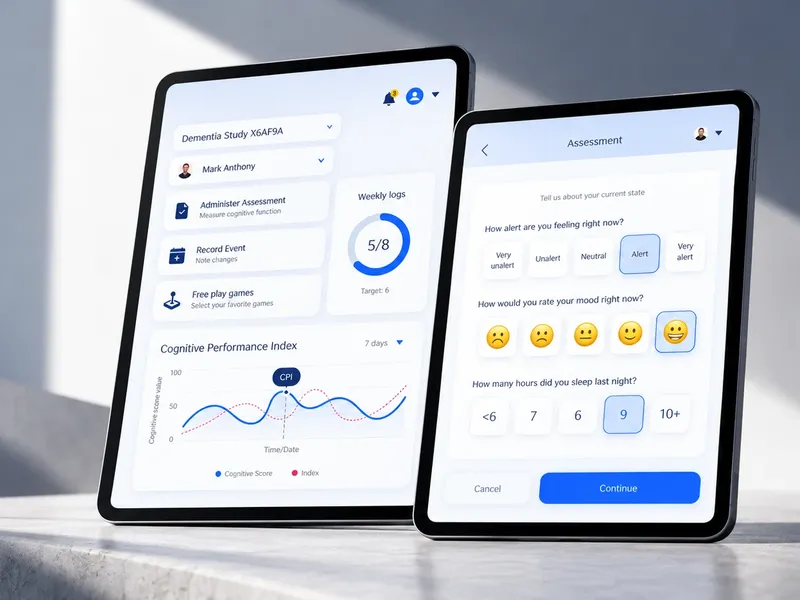
An AI ecosystem for dementia tracking.
The Lucidity app ecosystem, built with the Department of Neuroscience: patients play brain games while biomedical devices collect biometrics, and an AI model turns both into continuous, objective insight into disease progression.
Read case study →Related capabilities
Intelligent Automation
Move repetitive healthcare administration toward exception-based operations.
Explore Intelligent Automation →Enterprise Knowledge & RAG
Give staff trusted access to protocols and institutional knowledge.
Explore Enterprise Knowledge →Private & On-Premise AI
Build AI around sensitive health data without unnecessarily giving up control.
Explore Private AI →AI Agents
Introduce controlled AI actions into enterprise workflows.
Explore AI Agents →Managed AI
Operate and monitor AI after it enters production.
Explore Managed AI →
Where is administration taking time that should go to care?
We’ll work with your clinical, operational and technology teams to identify where AI can materially reduce administrative work, improve access to information or strengthen decision support — while designing around patient privacy and the oversight healthcare requires.
Explore AI opportunitiesStart with the workflow. Define the controls. Prove the value.